What is a Solar Inverter and how does it work?
A solar inverter is the component in your solar panel system which changes the direct current (DC) electricity captured by the solar panels, into alternating current (AC). AC current is the standard flow of electricity required to power your home appliances and connect to the National Grid. It is usually equal to either 120 volts or 240 volts depending on the country. Simply without a solar inverter in your system, you would be unable to power your home safely from your solar energy.
As a solar panel system is only as efficient as its weakest part, a high quality inverter is an essential part of your panel set up. Capable of maximising the available energy being generated by your Solar Panels. The importance of inverters are often overlooked during the design stage, but not here at Deege Solar.
What does a Solar Inverter do?
Solar inverters are the brains of any solar PV system and play a crucial role in how solar energy is converted and used. Their essential features include:
- The ability to convert direct current to alternating current.
- Maximising power output.
- Communicating with the National Grid.
- Giving feedback information about power production.
- Ensuring that your solar PV system is operating safely.
The Different Types of Solar Inverters
The three main types of solar inverters are String Inverters, Microinverters, and Hybrid Inverters. While these are often considered the primary options, there are several others types of inverters worth knowing, including AC-Coupled Inverters and Power Inverters/Optimisers. In this blog, we will explore the key characteristics, and pros and cons of each type of solar inverter available. By the end, choosing the right solar inverter for your system will be simpler than ever.
If you a looking a brand comparison, see our best solar inverters page.
-
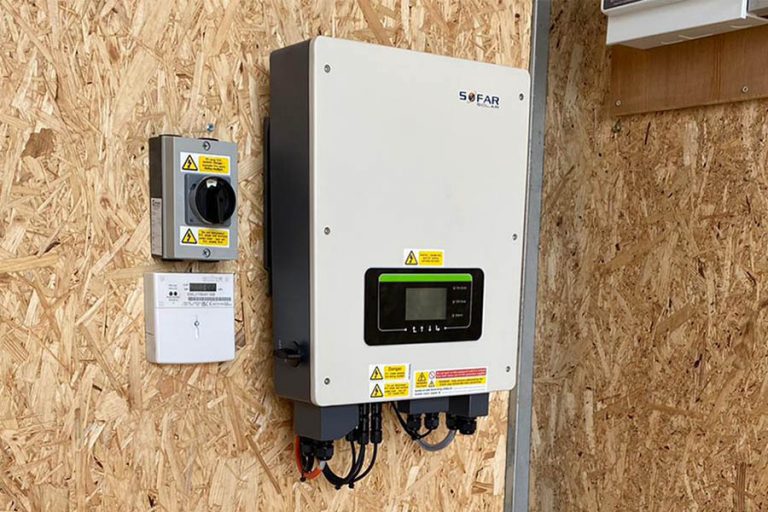
String Inverters
The Pros of String Inverters
- A string inverter is a cost-effective solution, offering a lower upfront cost compared to microinverters or optimisers.
- A trusted, proven technology that is widely adopted in both residential and commercial systems.
- With just a single unit to monitor, update, and service, maintenance is simplified and installation is straightforward.
The Cons of String Inverters
- String inverters offer limited design flexibility, as strings must be balanced in orientation, tilt, and panel type to achieve optimal efficiency, making them less suitable for more complex projects.
- The performance of the entire string is impacted if even a single panel is shaded, dirty, underperforming, or in low light.
- They provide only system-level data unless optimisers are added, which can make fault detection more challenging.
- They require a minimum number of panels to generate power, making them less suitable for smaller installations such as solar balconies or certain new-build projects.
-
MicroInverters
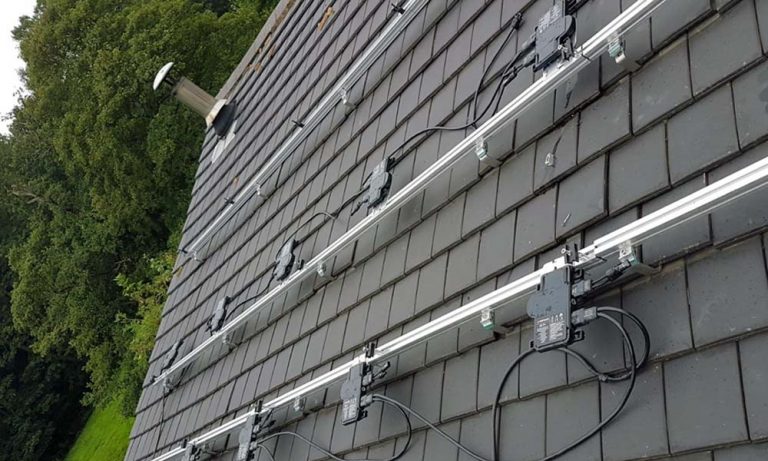
A relatively new technology, a microinverter is a small device attached directly to the back of each solar panel. Traditional inverters, both string and hybrid, convert DC electricity to AC for an entire string of panels, as a result a fault or shading on a single panel will impact the performance of the whole array. In contrast, microinverters work individually per panel, isolating issues and ensuring optimal performance.
Microinverters are ideal for roofs with shading factors or more complex designs. For instance, where panels are facing multiple orientations, you are mix-matching different brands of panels, different wattages, and inclinations.
While more expensive than classic string inverters, microinverters can increase overall solar energy generation and improve your return on investment. They also provide detailed per-panel monitoring, making fault finding faster and more efficient.
Popular microinverter manufacturers include Enphase, APsystems, and Sigenergy.
For more information about the differences between string and microinverters, head over to our blog: microinverters vs String Inverters.
The Pros of Micro Inverters
- Microinverters make it easy to expand a solar system, since additional panels aren’t constrained by the power rating of a single inverter.
- Thanks to panel-level optimisation, issues like shading, dirt, or low light on a single panel won’t reduce the performance of an entire array.
- Microinverters provide enhanced, per-panel performance data, this makes makes identifying faults faster and easier.
- By converting DC to AC at panel level, microinverters eliminate the need for high-voltage DC cabling inside the property, enhancing overall safety.
- Microinverters often come with longer warranty periods of 20–25 years, aligning more closely with the lifespan of solar panels.
The Cons of Micro Inverters
- Microinverters come with a higher upfront cost in comparison to string inverters, as each solar panel requires its own inverter.
- If a single microinverter is damaged and requires inspection, scaffolding may be needed at the customer’s expense, making the replacement of one unit potentially more costly than replacing a single string inverter.
- More components can create more potential points of failure, but microinverters are generally very dependable.
-
AC-Coupled Inverter
An AC controller, or AC-Coupled Inverter is a type of inverter that controls and manages the flow of the AC electricity with a system.
For homeowners looking to install battery storage without solar panels to take advantage of Time-of-Use tariffs, or those who want to retrofit battery storage to an existing solar system, an AC-coupled inverter is an ideal solution.
When installed alongside a string inverter, an AC-coupled inverter allows you to access the benefits of battery storage, including storing surplus energy, increasing your use of renewable energy, enhancing system flexibility, and maximising your investment.
In recent years, the sector has seen innovative solutions such as the GivEnergy All-In-One and Tesla Powerwall 2, which combine an AC controller and battery storage into a single, integrated unit. This approach offers a simplified installation and a more streamlined, compact solution.
The Pros of An AC-Coupled Inverter
- A cost-effective choice for adding battery storage to an existing PV system without the need to replace the current inverter.
- As the Solar PV and battery storage operates independently, if one fails, the other can still function.
- An AC-coupled inverter can be paired with almost any existing solar system, regardless of the inverter brand.
The Cons of An AC-Coupled Inverter
- An AC-coupled system is less efficient than a DC-coupled system, as the energy undergoes multiple conversions (DC → AC → DC → AC), reducing overall efficiency and long-term ROI.
-
Hybrid Solar Inverters
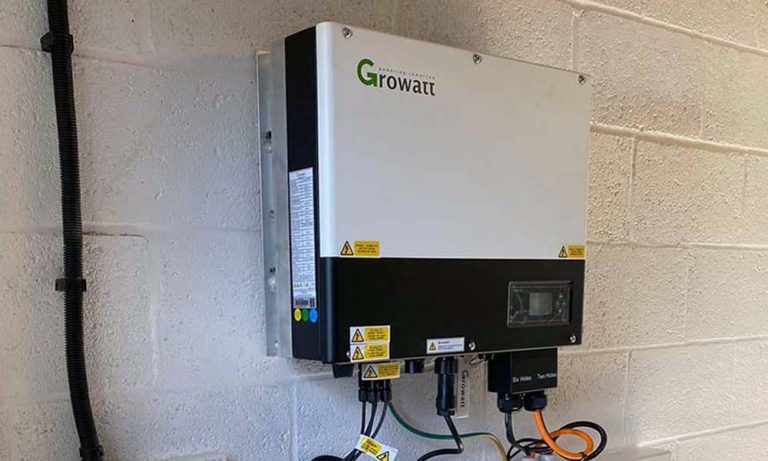
A hybrid inverter combines the functions of a traditional solar inverter and a battery storage inverter into one unit. As a result, if you are installing a new solar PV system with a solar battery, then a hybrid inverter is well worth considering.
Since solar panels generate DC electricity and household appliances require AC power, a hybrid inverter can convert DC into AC for immediate use. At the same time, any surplus DC power can be stored directly in a solar battery or sold to the Grid via a SEG (Smart Export Guarantee) tariff. When your home needs that stored energy, the hybrid inverter converts it back into AC so it can be safely used by your appliances and the National Grid.
This hybrid approach provides greater flexibility and control over your energy use, while allowing you to store excess solar energy for use during the evenings or when demand is higher than your generation.
This type of system configuration is known as a DC-coupled system. To learn more about how this compares with an AC Coupled system, check out our blog: AC vs DC Coupled Solar Batteries.
Most manufacturers that offer battery storage also provide hybrid solar inverters. Brands include GivEnergy, Solis, Growatt, and Fox ESS. Some newer products, like the EcoFlow PowerOcean, feature a stackable hybrid inverter and battery system for modularity, while models such as the Tesla Powerwall 3 have a hybrid inverter built directly into the unit for easier installation.
The Pros of a Hybrid Inverter
- As a hybrid inverter is integrated directly into your solar battery and panels, it helps to centralise monitoring, for greater smart energy management. Allowing you to optimise self-consumption and export control via your monitoring platform.
- Direct DC coupling between panels and batteries minimizes conversion losses, making hybrid inverters highly efficient.
- A hybrid inverter is a compact all-in-one solution that combines solar and battery management in a single unit, saving space compared to separate systems.
The Cons of a Hybrid Inverter
- If you already have solar panels and want to add a battery, it is usually more cost-effective to install an AC-coupled battery system rather than replacing your existing inverter.
- Hybrid inverters are 50% more expensive than string inverters. They also only integrate with DC coupled batteries, which can sometimes limit your battery choice.
- A Hybrid inverter acts as a single point of failure so if it fails, both your solar generation and battery storage is affected.
- While hybrid inverter sizes continue to evolve, most manufacturers currently offer a maximum of 6 kW, which can limit the number of solar panels you can install before needing an additional unit. In contrast, string and microinverter systems generally offer greater flexibility with fewer size constraints.
-
Power Inverters (DC Power Optimisers)
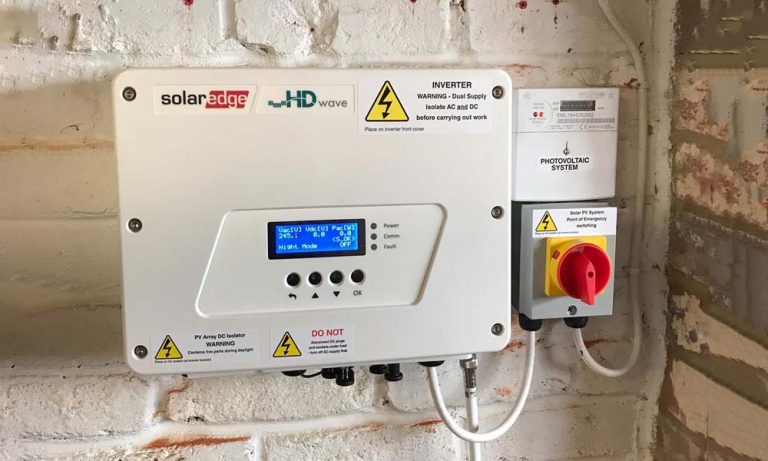
Power inverters, also known as Power Optimisers, offer many of the same benefits as microinverters and are also installed behind each individual solar panel. Like microinverters, they provide panel-level optimisation and performance monitoring, perfect for shading and complex designs. However, instead of converting DC to AC at roof level, a power optimiser passes the DC electricity to a traditional string or hybrid inverter, which is likely located near your battery storage system, for conversion.
Power optimisers are generally viewed as a more cost-effective alternative to microinverters. SolarEdge is the market leader in this technology, with its inverters working exclusively with SolarEdge power optimisers to deliver module-level Maximum Power Point Tracking (MPPT). Choosing this type of solar installation unlocks a wide range of advantages, from increased energy generation to advanced fault detection and enhanced safety features like Arc Fault Detection. The benefits of SolarEdge make it a smarter, safer, and more efficient way to maximise on your clean energy investment.
Brands such as Tigo manufacture power optimisers that work with virtually any solar inverter, while brands like Sungrow, Huawei, and SolarEdge pair their power optimisers with dedicated optimised inverters specifically designed for maximum performance.
The Pros of a Power Inverter
- Power inverters are a cheaper alternative to Micro-inverters, offering some of the same benefits just at a lower price point.
- Power inverters maximise energy production by reducing the impact of shading and mismatched modules, allowing for greater design flexibility.
- A SolarEdge String Inverter offers a record-breaking 99% efficiency, guaranteeing an improved ROI.
- Some brands, such as Tigo, are compatible with a wide range of inverters, allowing you to enjoy the benefits of power optimisers alongside your preferred inverter.
- Provides detailed per-panel performance data, making fault detection easier and offering greater overall visibility and insight.
The Cons of a Power Inverter
- Power optimisers still rely on a string or hybrid inverter to convert DC to AC, so unlike microinverters, they are not fully independent. If the main inverter fails, the entire system will stop producing power.
Which Type of Solar Inverter is right for your project?
When exploring the right type of solar inverter for your project, there are several factors to consider. Ultimately, your choice may depend on your budget, roof configuration, safety requirements, whether you plan to add battery storage, or if you need a system capable of off-grid operation. The right inverter will align with your system design, roof layout, and energy goals. Here’s a summary of the main inverter options:
- String Inverters are a cost-effective and reliable solution for standard, unshaded roofs where all panels face the same direction.
- Microinverters are ideal for complex roofs with shading, multiple orientations, or mixed panel types. They provide per-panel optimisation and monitoring, making them a great choice for homeowners with safety concerns.
- Hybrid inverters work best for new solar PV systems that include battery storage, enabling efficient DC-coupled energy management and providing backup power in the event of a power cut.
- AC-Coupled Inverters are perfect for retrofitting batteries to existing solar systems without replacing the current inverter, or for homeowners seeking a standalone battery solution.
- Power Optimisers combine some benefits of microinverters with string inverter setups, improving performance on partially shaded or mixed-panel arrays at a more affordable price point. They are also suitable for homeowners interested in granular per-panel data and enhanced safety.
At Deege Solar, we offer free consultations to design a bespoke solar panel system tailored to your needs. As MCS-certified installers with over 12 years of experience, you can trust that your project is in safe hands. Call us today on 01322 479369 or click the Enquire Now button to speak with a solar expert and learn more about the different types of solar inverters.