Deege Solar
  • Solar
    • Home Solar
      • Solar Panels
      • Solar Panels & Storage
      • Solar Batteries
    • Commercial Solar Panels
    • Off Grid Solar Systems
    • SAHP
    • Solar Finance
  • Products
    • EV Chargers
    • Tesla Powerwall
    • Sigenergy
    • SolarEdge
    • Enphase
    • Sungrow
    • Growatt
    • GivEnergy
    • Duracell Energy
    • GoodWe
    • Smart Devices
  • Maintenance
    • Solar Maintenance
    • Bird Proofing Solar Panels
    • Solar Panel Cleaning
  • About Us
    • About Us
    • Accreditations
    • Awards
    • Partners
    • Careers
    • Referral Scheme
    • Media & Press
    • Reviews
  • Case Studies
    • Commercial Solar Case Studies
  • Blog
  • Contact
Updated: 18 December 2023

The Best EV Chargers of 2024 | A Guide To EV Chargers
The Best EV Chargers of 2024 | A Guide To EV Chargers
Updated: 18 December 2023

The Best Home Electric Vehicle Chargers

So your officially an electric car owner, but if choosing the right electric vehicle wasn’t hard enough, you now have to choose an home charger too! Finding the right home charger can be difficult. There are a lot of factors to consider: charging speed, manufacturer, compatibility, the list goes on. Hence why the team here at Deege Solar have put together a guide to help you understand the different types EV chargers on the market, and to showcase the best of the best!

How Do I Know Which EV Charger is the best?

Depending on which features you wish to prioritise, the best EV Charger can differ project to project. Lucky for you, the team here at Deege Solar have put together a list of key features to compare before choosing which home charging point to install.
  • Charging Speed

The charging speed of an EV charger effects how long your Electric vehicle takes to be fully charged. The time it takes to charge an electric car depends on 3 factors:

  1. The size of the EV’s battery.
  2. The EV Charger Power.
  3. And the Charging Time.

Types of EV Charging Speeds

Rapid charging – Rapid charging is the fastest way of charging your EV. Especially when on the move. A rapid charger typically has an output of anywhere between 50kW and 350kW. Rapid EV chargers or DC chargers are generally used for public charging points. Public charging points are commonly found at service stations and charge parks along motorways in the UK.

Slow Charging – A slow charge is typically through a 13amp 3pin mains socket and has an output between 2.3kW and 3.5kW. Due to the uptake of 7kWh fast EV chargers, slow charging is becoming less common now.

Granny Charging – A granny charger, as the name suggests, is the slowest and eldest form of electric vehicle charging. Effectively another form of slow charging, Granny charging simply takes power from a typical 13amp 3 pin socket in the home and charges at the rate of 2.3kWh. Charging through a mains socket is 3 x slower than using a fast charger. Many EV’s provide a granny charger as a means of emergency charging.

Fast Charging – Fast EV chargers typically have an output of either 7kW or 22kW, with 7kW being the most common EV charger for the home and workplace. Most home charging points tend to be 7kWh, however it is possible to charge at 22kWh if there is a three-phase supply.

Phase

When it comes to electricity, phase refers to the power supply. A single-phase EV charger can charge your EV at a maximum of 7.4kW. However a three-phase charger can charge your Electric Vehicle at a maximum of 22kW. Three phrase chargers offer faster charging rates, and are more common at places of work or commercial building. Nevertheless, it is possible to get a three-phase home charging point installed if your home has a 3 phase supply.

What is a KW?

kW stands for kilowatt, and is a measurement of how much electricity an appliance needs to run. A kilowatt is 1,000 watts. The large the kW of an EV charger, the more electricity the home charging point can provide.
  • Smart Charging

A smart charger is an EV charger that can be accessed remotely. The majority of home charging points come with the own unique monitoring platforms. This feature allows you to monitor your car charging, accept firmware updates and take control of your EV charging remotely. All that is required is an internet connection, which may be difficult for those living in more rural off-grid areas. Smart chargers allow for integration with other technologies, and future proofing. One of the main benefits of smart charging, is the ability to take advantages of time-of-use tariffs such as Economy 7, or Octopus Go, when the price to charge your electric vehicle is cheaper. However, smart chargers are usually more expensive than regular EV chargers.
  • Connector Type

Similar to your phone chargers, an EV charger consists of two connectors. One that plugs into the electric vehicle and the other that plugs into the chargepoint itself. The type of connector you need varies by vehicle and the power rating of the EV charger. Electric vehicles either have a Type 1 or Type 2 socket for slow/fast charging. Since the phasing out of Type 1 connectors (5-pin connectors), almost all modern EVs and home charging points have the same Type 2 inlet. Type 2 connectors (7-pin connectors) are currently industry standard, and can be found on public chargers also.
  • Tethered or Untethered

In comparison to an untethered charger, a tethered EV charger comes with a cable attached to the home charging point. This is not only convenient but also an all in one solution.

An untethered EV charger means that the charging cable does not come hardwired to the chargepoint. This means you can use your own, allowing for custom cable lengths, and flexibility for both Type 1 and Type 2 EVs. This choice is particularly useful if there are multiple electric vehicle in your household that use different cables.

  • Green Energy Ready

Some EV chargers have the ability to work hand in hand with Microgeneration technologies, such as Solar PV or other types of renewable energy resources. This means you will be able to use your surplus green energy to power your electric car more affordably. An essential if you are a homeowner with a renewable system installed!

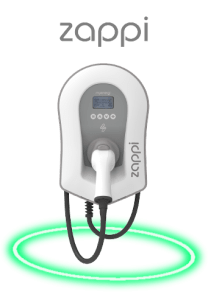
Solar EV Chargers such as the Zappi, will allow you to charge your car solely from the green energy generated for your solar PV or wind system. Or from a mixture of both your own green energy and energy imported from the grid. By utilising what is known as ‘Load balancing’ or ‘Dynamic Load Balancing’ these smart EV chargers are able to monitor the energy demand of both your home and electric vehicle. In doing so, it can adjust the amount of charge going to your device, according to your green energy generation.

EV Charger Comparison - Home Edition

Below our green team have put together a comparison table for some of the EV Chargers available on the market. If you would like to find out more information regarding EV Chargers contact our team on 01322 479369.

EV ChargerPriceCharging SpeedsConnector
Type
Smart
Charging
Solar
Charging
SafetyWarrantyLoad
Balancing
DurabilityOLEV
Approved
Adjustable
Power
Myenergi Zappi EV Charger£££7kW Single Phase
22kW 3-phase.
6.5m Type 2 Tethered or Untethered.YesYes- Built In PEN-fault technology.
- Pincode protected.
3 YearsYesIngress Protection: IP65YesYes
Tesla EV Charger£££7.4kW Single Phase
22kW 3-Phase
7.3 m Type 2 Tethered
Yes
No- Built in RCD Type A + DC 6mA protection3 YearsYesIngress Protection: IP55NoYes
Rolec Home EV Charger££3.6kW Single Phase
7.2kW Single Phase
11kW 3-Phase
22kW 3-Phase
Type 1 or Type 2 Tethered.

Type 2 socket versions
YesYes- Built-in overload and fault current protection.
- Certificated by the BSI.
- OCPP 1.6 Compliant
3 YearsNoIngress Protection: IP65YesNo
Wallbox Pulsar Plus EV Charger££7.4kW Single Phase
11kW 3-Phase
22kW 3-Phase
5m Type 1 or Type 2 Tethered (7m optional)YesNo- Built In Earthing
- Integrated PEN fault protection
- Residual Current
Detection (DC 6mA)
3 Years
But Can
Extend
Optional ExtraIngress Protection: IP55
Impact Protection: IK10
YesYes
EO Mini Pro 2 EV Charger££7.4kW Single PhaseType 1 or Type 2 Tethered.

Untethered Available.
YesYes- Locking feature to prevent others from using your charger.
- Conforms to International Safety Standards.
3 YearsYesIngress Protection: IP54YesYes
Project EV Home EV Charger£7.3KW Single PhaseUntethered with a Type 2 Connector Port
Yes
Yes- Built-in Earthing.
- Full Electrical Protection including over/under Temperature Protection.
- System Locking
5 yearsYesIngress Protection: IP65YesYes
Puredrive EV Charger££ 7.4kW Single Phase4m Type 2 Tethered
(7m optional)
YesYes- Over current protection
- Residual current protection
- Ground protection
- Surge protection
- Over/Under voltage protection
- Over/Under frequency protection
- Over/Under temperature protection
3 Years-Ingress Protection: IP65
Impact Protection: IK10
Flame Retardant: UL 94V-0
Yes-
Givenergy EV Charger£ 7kW Single Phase5m Type 2 Tethered YesYes- Over Voltage Protection
- Over Load Protection
- Earth Leakage Protection
- Over Temp Protection
- Type B RCD Built-in
- Under Voltage Protection
- Short Circuit Protection
- Ground Protection
- Surge Protection
3 Years-Ingress Protection: IP65 No-
SolarEdge EV Charger£££4.6kW Single Phase
7.4kW Single Phase
11kW 3-Phase
22kW 3-Phase
6m Type 2 Tethered YesYes3 Years-Ingress Protection: IP54
Impact Protection: IK10
NoYes

How Do I Get An EV Charger Installed?

By now, you should know everything you need to about the best home EV chargers on the market. Getting a home EV charger could save you thousands over the lifetime of your electric car. So what are you waiting for? If you are a UK home or business owner looking to install the best EV charger on the market, get in touch with our green team. As OLEV approved installers, with over 12 year of experience, when you choose Deege Solar you know you are in safe hands. Call us today on  01322 479369 or click the enquire now button to talk to an expert!
Enquire Now
EV Chargers
Youtube Facebook-f Instagram Linkedin
  • enquiries@deegesolar.co.uk
  • 01322 479369
Previous articleBifacial Solar Panels: What are They and How Do They Work?Bifacial Solar PanelsNext article The Best Solar Panels of 2024Best Solar Panels To Install

About The Blog

Hi, we are Deege Solar and this is our blog, where we will be covering everything regarding Solar energy: from Solar Panels, Solar PV Systems, Battery Storage, EV Charges, and Solar Maintenance.

If you are a UK home of business owner interested in going solar, call 01322 479369 for a FREE quote! 

Recent Posts

  • Can You Install Solar Panels On A Garage Roof?
  • Are Fogstar Batteries any Good?
  • Frequently Asked Questions About Solar Inverters

Subscribe To Our Channel

Deege Solar Logo

Services

Solar PV & Storage
Solar Panels
Solar Batteries
Commercial Solar
Off Grid Solar Systems
EV Chargers

Contact

01322 479369
enquiries@deegesolar.co.uk
Mon – Fri 9:00am – 5pm

Deege Solar is the trading name of Deege Ltd

Company Info

Unit 4, St Margaret’s Estate,
St Margaret’s Road, South Darenth, Dartford, Kent,
DA4 9LB

Registered Business in England & Wales

Other

VAT Number: 275 9754 45
Company Number: 10633363

Privacy Policy
Cookie Policy
Complaint Policy

Copyright

Copyright Ⓒ 2020 | Website Designed & Created by Pico Designs for Deege Solar

Deege Solar is a trading style of Deege Ltd. Registered at Unit 4, St Margaret's Estate, St Margaret's Road, South Darenth, Dartford, Kent, DA4 9LB. Reg No. 10633363. We are authorised and regulated by the Financial Conduct Authority FRN935961. FCA Registration No. 935961. We are a credit broker not a lender and offer finance from a panel of lenders. Credit is subject to status and affordability.