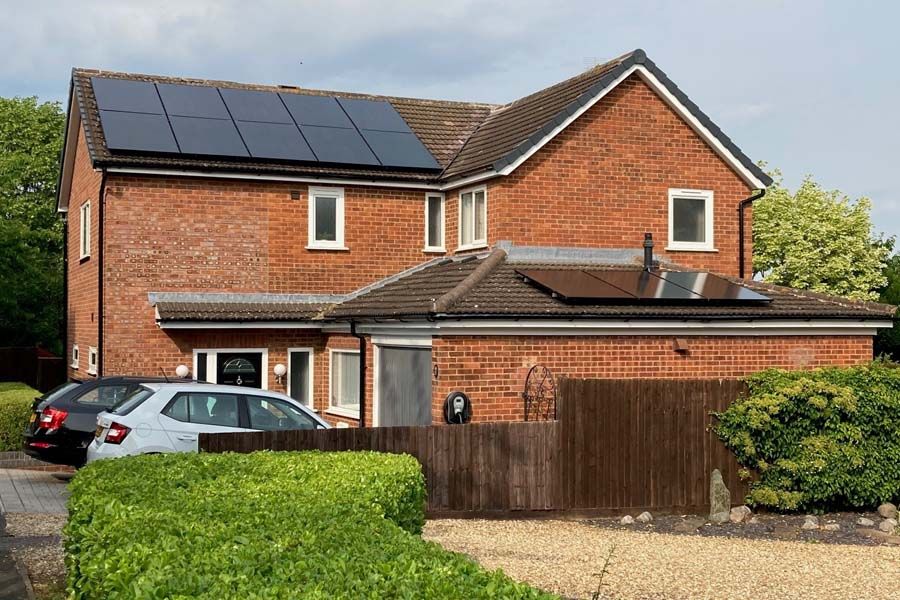
As the necessity for greater sustainable and environmentally friendly living grows, homes and businesses are striving to leverage different types of renewable energy sources where feasible. It you are looking at ways to save money on your energy bills, reduce your carbon footprint, and improve your home’s energy efficiency, then you have probably considered installing solar panels or heat pumps.
Both types of renewable energy systems are a great option for any home or business looking to cut carbon emissions, but when it comes to a heat pumps vs solar panels, which is the better choice?
We’ve put together this detailed side-by-side comparison of heat pumps vs solar panels, to give you all the information you need to make an informed decision.
What are Solar Panels?
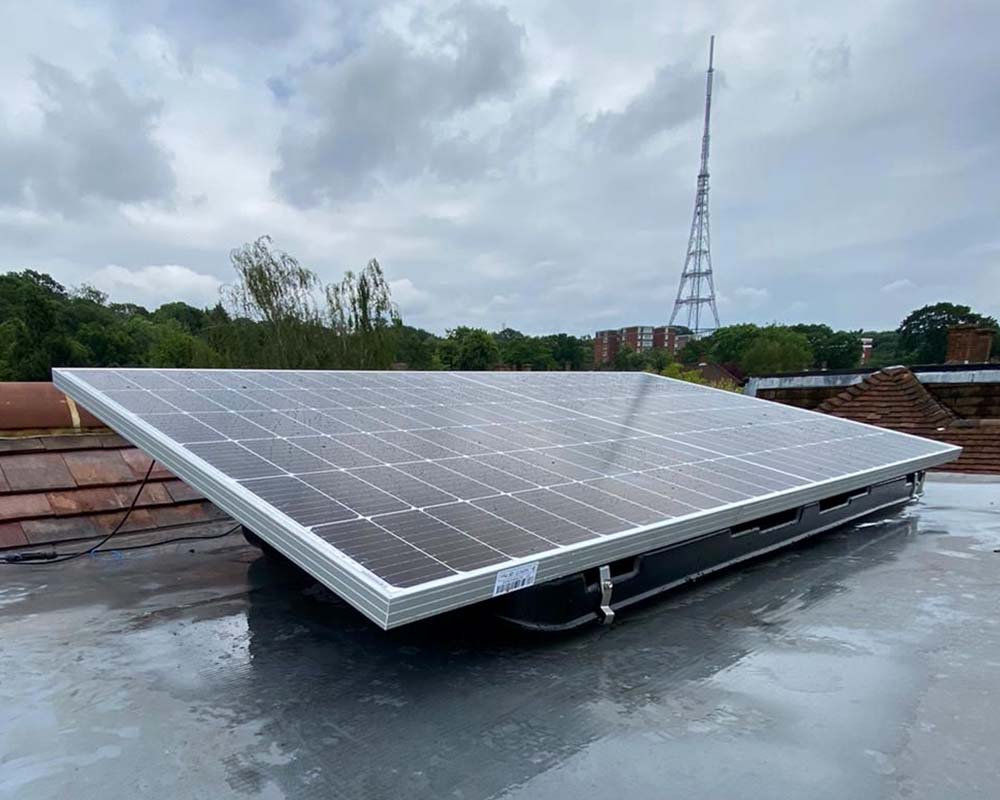
Solar energy is renewable energy which is harnessed from the sun. As sunlight is available in abundance, solar energy is one of the cheapest and greenest forms for renewable energy.
Solar energy can be used to generate both electricity and heat, through Solar PV Panels or Solar Thermal Panels. Thanks to their recent technological advancements, the uptake of Solar PV Panels has become increasingly popular. In 2022 alone, a record breaking number of 130,596 new solar installations were completed, driven by the energy crisis.
Solar panels, also known as photovoltaic (PV) panels, consist of multiple solar cells, made from semiconducting materials, such as silicon. When sunlight strikes these cells, the electrons become excited, creating an electric current. This phenomenon is known as the photovoltaic effect. This captured electricity can then be used to power your electrical appliances, to support the National Grid, or it can be stored in a solar battery to be used during periods of low generation. Making solar panels incredibly versatile.
Solar panels can be installed on rooftops, solar farms or other open spaces to harness sunlight. The recent widespread adoption of solar panels has contributed heavily to reducing dependence on traditional fossil fuels.
The Advantages of Installing Solar Panels
- Savings. Installing Solar Panels can slash both your consumption of fossil-fuels as well as your energy bills by up to 90%, when installed alongside a battery! What's more, Installing Solar panels can increase your home's value, as homeowners are not only more attracted to a reduce energy bill, but the environmental benefits of solar power also. This makes solar panels a worthwhile investment not only for the planet, but your pocket too.
- Maintenance Free. Solar panels require little to no maintenance and have an incredibly long lifespan. Providing you with clean green energy for around 40 years.
- Energy Independant. By generating your own electricity, you will be less reliant on the National Grid, and more reliant on the sun! This means that when the wholesale prices of electricity rise, or when your local grid suffers from a power outage, your home will be less impacted.
- Versatile. Solar panels are both versatile in the way we can install them, and in the way we can use the energy they produce. Thanks to the different types of solar panel mounting system, solar panels can be installed on flat roofs, in fields, and on roof tops. The energy you generate through your solar panels can be used to heat your water, or to charge your electric car off sunshine!
- 0% VAT. As part of the UK's efforts to reach Net Zero by 2030, VAT on solar panel installations is 0 up until April 2027. Meaning that there is no time like the present to invest in solar.
- Supporting The Grid. The electricity generated by Solar panels can not only be used to power your home, or business but to support the National Grid also. Any surplus energy you generate can be exported back to the Grid, for which you are paid for through the Smart Export Guarantee. This further enhances the economic benefits of installing solar panels.
The disadvantages of Installing Solar Panels
- Initial Costs. The upfront costs of purchasing and installing solar panels can be relatively high. However, the price of solar panels have been decreasing over time, and various financing options and incentives are available.
- Reliability. As Solar energy is dependent on sunlight, which can be intermittent due to weather conditions, time of day, and seasons. This intermittency may require additional energy storage solutions or backup systems, in order to provide your home with consistent solar power.
- Suitability. While most properties are suitable for solar, location, your roof and property characteristics, may limit the amount of energy your panels can produce. Alternative green technologies such as wind turbines or heat pumps, may be a better option for your home where solar isn’t! Read our blog to discover if you are eligible for solar.
- Long-term Investment. Although savings on energy consumption and energy bills begin immediately once the panels are installed, a return on investment is around 7-20 years. Solar panels can be expensive to move, making this type of renewable energy investment most ideal for those living in a long-term property.
What are Heat Pumps?
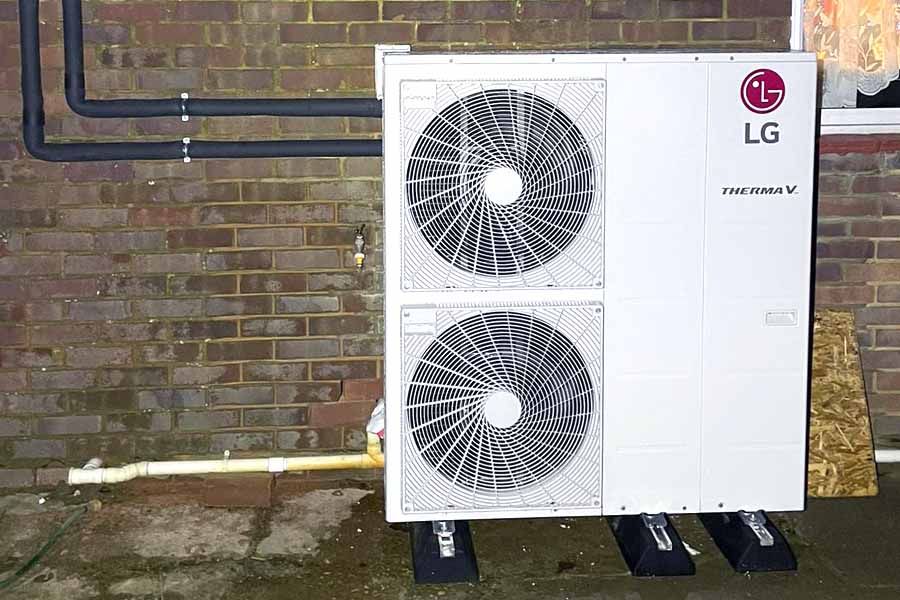
Heat pumps take advantage of the natural thermal energy which surrounds us, to help make our homes more green. Just like solar panels, there are different types of heat pumps: Air-source and Ground-source. Air source heat pumps are the most commons type of domestic heat pumps in the UK, as they are suitable for a range of homes. They are incredibly versatile and can be used for both heating and cooling, based simply of the basis that heat naturally flows from a warmer place to a cooler place.
An Air Source Heat Pump (ASHP) works by extracting heat from the outdoor air and feeding it into your central heating system as water in order to heat your home via radiators or underfloor heating. It can also heat water stored in a hot water cylinder for your hot taps, showers and baths. During the summer months, it works by moving the warm heat from indoors to the outdoors to provide cooling.
As a heat pump doesn’t burn any fuel, it doesn’t emit any carbon dioxide, however it does use electricity to transfer the thermal energy into your home. Nevertheless, a Heat pump can produce two to three times more heat output than they consume in electricity input.
The Advantages of InstalLing Heat Pumps
- Reduce Your Carbon Footprint. The main advantage of an air source heat pump installation, is that is it more environmental friendly compared to gas and oil boilers. Around 40% of global emissions come from buildings and most of these result from the ways we heat our homes and businesses. By installing a heat pump you could cut your carbon emissions in over 10 years by more than 23 tonnes.
- Government Funding. Unlike Solar Panels, Heat Pumps currently have greater funding support from the Government. For example you can get a grant of between £7500-£9000 towards installing a heat pumps in England, Scotland Wales through the Boiler Upgrade Scheme.
- Low Maintenance. A well-installed, well-kept air source heat pump can last fro up to 20 years. As long as you ensure your heat pump is clean, not obstructed, and your filters are frequently replaced then air source heat pumps are pretty low maintenance.
- Safety. Heat pumps are safer than combustion-based heating systems, as they require no fuel to generate heat.
- Efficiency. Heat pumps are incredibly efficient as they produce a larger amount of heat than the electricity they use. This is because they extract heat from the air or ground. Modern boilers can achieve which is impressive. However, many estimates state that a ground source heat pump can be up to 400% efficient.
The Disadvantages of Installing Heat Pumps
- Not Always Green. Although heat pumps are much more sustainable than oil, coal or gas heating systems, they do rely on electricity to run which isn't always greenest, especially is brought from the National Grid.
- Running Costs. Heat pumps run on electricity, which is three times more expensive than gas. Whilst this means that heat pumps are more expensive to run compared to traditional gas boilers, due to their efficiency they they use much less energy to run. According to Octopus Energy, a heat pump should cost around the same as a gas boiler to run for the average UK home.
- Suitability. It has been estimated that 54% of UK homes aren’t suitable for heat pumps. This is because to get the most out of a heat pump installation your property will require proper insulation, oversized underfloor heating and radiators, and an exterior location to fit the heat pump, and an interior locations for the hot water cylinder. Depending on the type of home you live in, you may need to improve your home's efficiency and existing heating system in order to be eligible, which adds to the overall installation costs, which the Grant doesn't cover you for.
Can you use Solar Panels to Power a Heat Pump?
Yes, you can indeed use solar panels to power a heat pump! In fact, it is often considered the perfect choice for homeowners who are looking to reduce their carbon footprint, whilst looking for the best return on their investment.
Whilst heat pumps are an excellent low-carbon heating and cooling solution, they are reliant on electricity to operate. Which is not only costly when imported from the National Grid, but also not always generated from renewable sources. By combining heat pumps and solar panels, you can use the electricity generated from the solar panels to not only power your home, but your heat pump also.
Using solar panels to power a heat pump, will help you save not only on the running costs of an ASHP but your energy bill also. By adding an energy storage solution also, you can ensure that your heat pump gets a constant supply of electricity all year round, either directly through the energy generated by your solar panels, or from off-peak electricity imported from the Grid. Consulting with an energy advisor can help you design and implement a renewable energy system tailored to your requirements.
Solar Panels or Heat Pumps : Which one should you Choose?
Choosing between installing Solar panels or a Heat pump, really depends on your specific energy requirements, the characteristics of your property and budget. Here’s a breakdown of the factors you should consider when choosing between solar panels or an ASHP.
1. Property Characteristics: Not every home is suitable for a heat pump or solar panel installation. It is important to evaluate the condition of your existing heating system, the size of your property, and if your roof is suitable for solar panels. Some properties may be more suitable for one solution over another, so it is really important to get an initial assessment to help determine your eligibility first.
2. Budget: It is important to assess your budget for upfront costs and also the potential long-term savings on your investment. If your property eligible for a heat pump installation, without requiring any additional home improvements, then an ASHP is likely to be your better option, due to the current funding available, and lower initial cost of installation. Both solar panels and heat pumps have different cost structures, with solar panels saving you more in the long run. Make sure to check for available incentives, rebates, or tax credits in your area as this may influence your decision.
3. Energy Requirements: It is important to determine your energy goals and requirements prior to making a decision. What are you trying to achieve? Whether you are looking to reduce your energy bills, become more energy independent or minimise your environment impact, each solution will meet these goals differently. You will need to also assess how much energy you are currently using, when you are using it the most, in order to get the right system for your energy requirements.
Both solar panel and heat pumps are great types of renewable energy, that will help you elevate your home. When it comes down to solar panels vs heat pumps, the first stage should always be your eligibility. Consulting with an energy expert, will help you gain a clear insight into what either an ASHP or solar panel installation can do for you.
At Deege Solar, we offer free remote surveys for all UK homeowners looking to have solar panels installed. This includes designing a system to meet your budget, energy requirements and providing a 25-year savings forecast. Deege Solar are not only MCS certified solar installers, but are also accredited by Napit, IWA, EPVS and more! If you are a UK homeowner, you can receive a free survey and quote simply by getting in touch with our green team on 01322 479369.