As the desire to live cleaner and greener lifestyles continues to grow, individuals, businesses and governments attempt to harness energy from renewables where possible. The use of solar to produce electricity has proven a popular choice in recent decades.
In light of the new Green Grant that has come into place in the UK, it felt relevant to discuss the distinction between Solar Panels. The Green Grant covers Solar Thermal Panels, but what does that mean exactly?
Many customers wouldn’t know this but there are two types of Solar Panels. Solar PV and Solar Thermal. Both utilise the sun’s energy to produce renewable energy, however through different technologies. Here we’ll take a crash course on solar energy including the key differences between Solar PV Panels and Solar Thermal Panels.
What is solar power?
Solar power is one of the cleanest, cheapest and most plentiful sources of energy on the planet. Simply put, solar power is energy that comes from the sun (in the form of heat and light) that is converted into electrical or thermal energy.
What are Solar PV Panels?
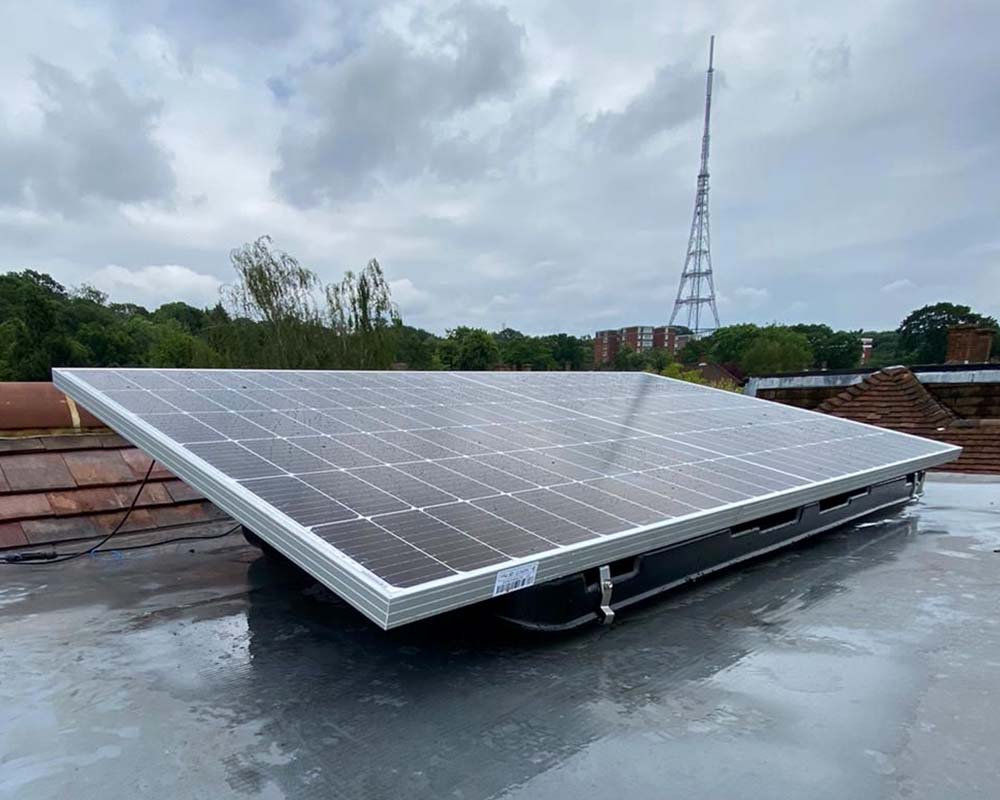
Sunlight moves an astounding distance of 93 million miles before it reaches Earth. The far-travelling sunlight that lands on your solar panels can be transformed into electricity that we use daily, but how?
Solar panels are comprised of smaller units called solar photovoltaic (PV) cells. Solar PV cells convert sunlight into electricity by allowing photons (which are particles of light) to knock electrons free from atoms, generating a flow of electricity.
This energy can be:
- Used to power all devices and appliances in a property.
- Stored in a solar battery if excess power is generated, to be used when needed or during periods of low sunlight. Such as in the evening or during the night time.
- Moved to the National Grid, making the grid greener and reducing the carbon footprint for an individual, family or business.
Simply put Solar Photovoltaic or Solar PV panels, turns direct sunlight into electricity.
The Advantages of Solar PV Panels
- Savings. Installing Solar PV panels can slash both your consumption of fossil-fuels as well as your energy bills by up to 70%! Solar is more affordable than ever. What's more, Installing Solar panels can increase your home's value. Making it a great investment not only for the planet, but your pocket too.
- Maintenance Free. Solar panels require little to no maintenance and have an incredibly long lifespan. Especially in comparison to solar thermal panels. Providing you with clean green energy for around 40 years.
- Energy Independant Less reliance on the National Grid for your power supply, meaning your property will less likely be affected by operational issues or local power outages.
- More Versatile. Solar Photovoltaic technology has the potential not only to generate green electricity, but also heat your water and charge your electric car off sunshine!
The Disadvantages of Solar PV Panels
- Initial Costs. With any product of this kind, there is an initial cost of purchasing a solar system despite the financial return in a few years’ time.
- Suitability. While most properties are suitable for solar, location and sunlight availability may limit the amount of energy your panels can produce. Alternative renewables such as wind may be a better option where solar isn’t! Read our blog to discover if you are eligible for solar.
- Long-term Investment. Although savings on energy consumption and energy bills begin immediately once the panels are installed, a return on investment is around 7-20 years. Solar panels can be expensive to move, making this type of renewable energy investment most ideal for those living in a long-term property.
What are Solar Thermal Panels?
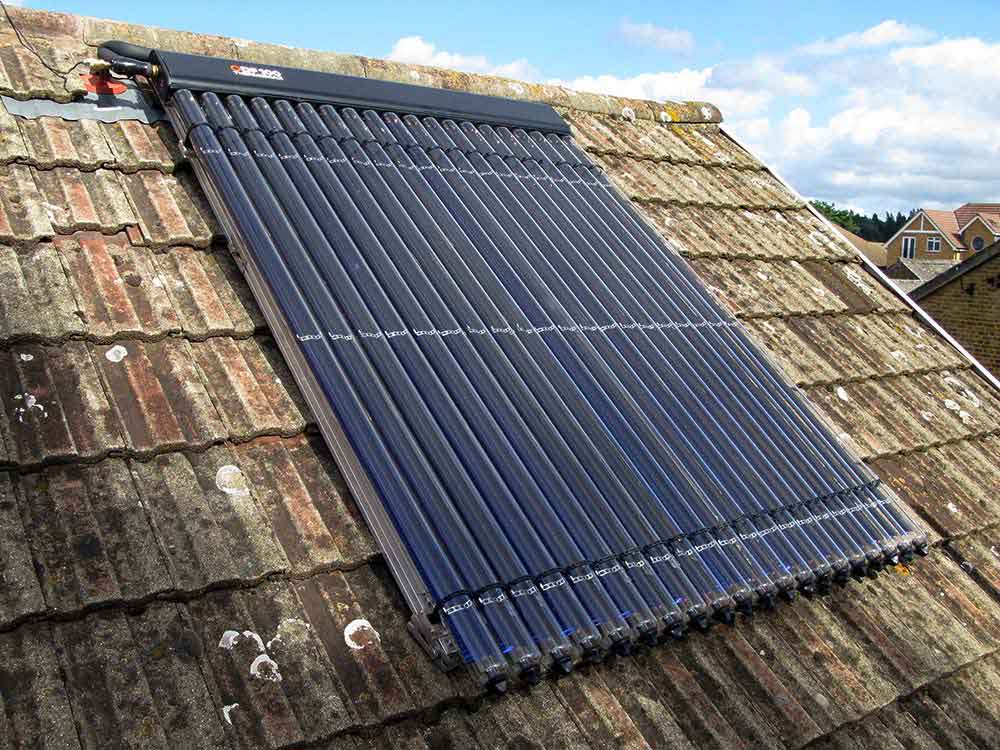
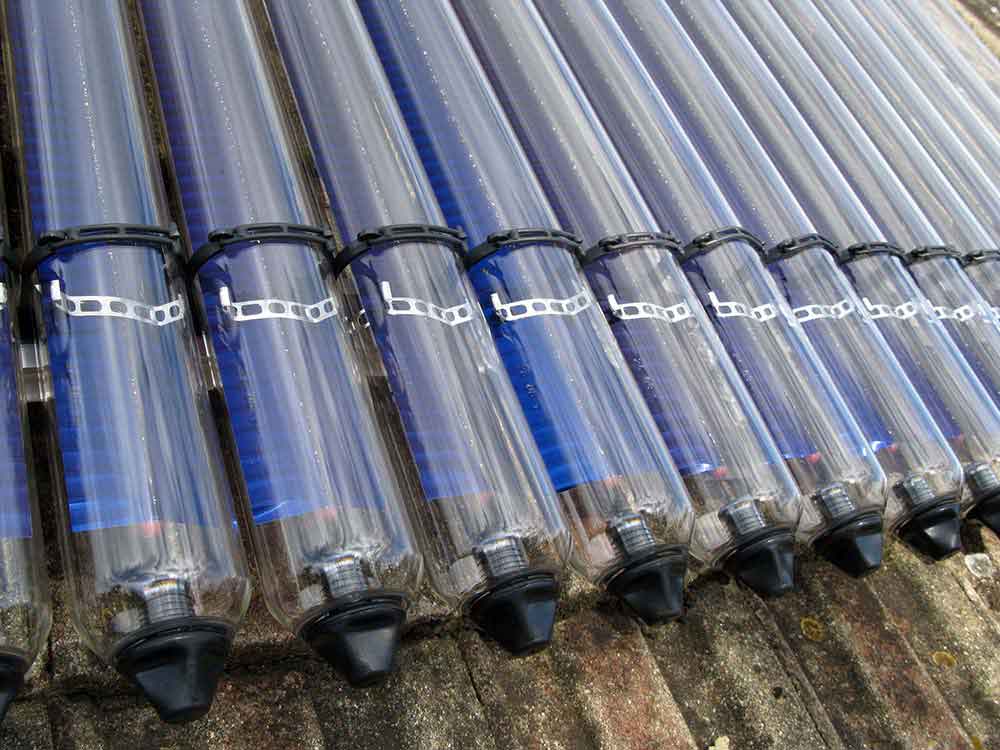
Solar thermal panels (also known as solar collectors) were the first solar energy products to be commercialised in the UK. These panels use the heat from the sun to produce hot water or steam. Like solar PV panels, these devices are also mounted on your roof to get as much exposure to the sun as possible. The sun’s heat is used to warm the liquid that runs inside the tubes, usually glycol with antifreeze, and this is transported into your water tank ready to use. Installations aren’t complex, and can be added to an existing water-heating system, compatible with both conventional boilers and immersion heaters too.
Simply put, solar thermal panels turn sunlight into heat instead of electricity.
The Advantages of Solar Thermal Panels
- Solar Savings. These devices can help you save on your energy bills by covering your heating needs using a totally free, clean and renewable energy source.
- Reduce Your Carbon Footprint. The use of solar to heat water in turn reduces a consumer’s carbon footprint – Saving up to 600kg of CO2 emissions a year!
- Efficient. Solar thermal panels are more efficient than PV panels due to waves of heat carrying more energy than waves of sunlight. In some instances, they can be up to 70% more efficient in collecting heat from sun rays than solar PV. Solar thermal is also more space efficient than solar PV! Therefore, it is the perfect solution for smaller roofs.
- Short Payback Time. Solar thermal panels are relatively cheap to install (and have a shorter payback period than PV panels).
The disadvantages of Solar Thermal Panels
- Initial Costs. With any product of this kind, there is an initial cost of purchasing a solar system despite the financial return in a few years’ time.
- Limited Storage. While excess energy from sunlight can be stored in batteries, storing hot water for longer periods of time without a large loss of heat is trickier. All this means is being a bit more mindful of the water you’re using (and there’s nothing wrong with that!).
- Inconsistent. Although Solar thermal may be more efficient, they aren't as effective during colder months, simply because there isn’t the heat from the sun to make them work. This makes them less versatile compared to solar PV panels, which have year round, optimum, functionality.
- Shorter lifespan. Relying solely on solar to warm your water can cause some inconsistencies, but as solar thermal panels are able to function in different climates and conditions, the average consumer should experience very few issues.
Solar Thermal or Solar PV : Which one should you choose?
Both solar thermal and solar PV technology are great types of renewable energy. Capable of providing your home with an environmentally friendly energy solution! Like picking your favourite bar of chocolate, this is a difficult question to answer! While we can’t provide a definite answer, as everyone’s energy needs are different, we can present you with the facts.
While solar thermal is more space efficient and slightly cheaper, solar PV offers better technology development. With ways to store your excess energy, as well as the ability to heat your water. By coupling PV panels with an immersion divertor, they can behave in a similar way to a Solar Thermal Panel. With an immersion divertor being a more cost-effective maintenance free alternative. Also known as an immersion optimiser, these smart device such as an iboost or myenergi eddi, makes all the difference. Providing you with the quickest payback time possible.
This added dual functionality definitely gives Solar PV the competitive edge. What’s more, as Solar PV is the newest of the two technologies, we are constantly seeing new innovation in the market. Including compatibility with Electric Vehicles.